Build a Website Yourself: The Ultimate 2026 Strategy Guide
Stop waiting for “the right time” or a massive budget to launch your dream. The digital landscape is littered with beautiful, expensive websites that no one ever visits because they were built as static brochures, not living systems. If you want to build a website yourself, you don’t just need a template—you need a vision and a plan.
In 2026, the internet rewards the brave and the organized. This guide isn’t about just “having a site.” It’s about engineering a foundation for your business using foundational SEO and hyper-focused content that speaks directly to your future clients.
The Heartbeat of Foundational SEO
Before you pick a single font, you must understand structural SEO. It is the invisible skeleton that supports your brand’s weight. Many people fail because they decorate a house built on sand.
Foundational SEO is your promise to your audience that your site is reliable and easy to navigate. It’s about lightning-fast speeds and a logical hierarchy. When you build a website yourself, you aren’t just a designer; you’re an architect. A solid technical base ensures that when you finally shout your message, the world can actually hear you. Google provides an invaluable Search Engine Optimization (SEO) Starter Guide that you should familiarize yourself with to understand how it works.
Architecture with a Vision: The Cloud Six Way
When we engage with clients at Cloud Six, we don’t just build for today; we design for your “Next Big Move.” The architecture of your site should be a roadmap, not a box.
Built to Scale
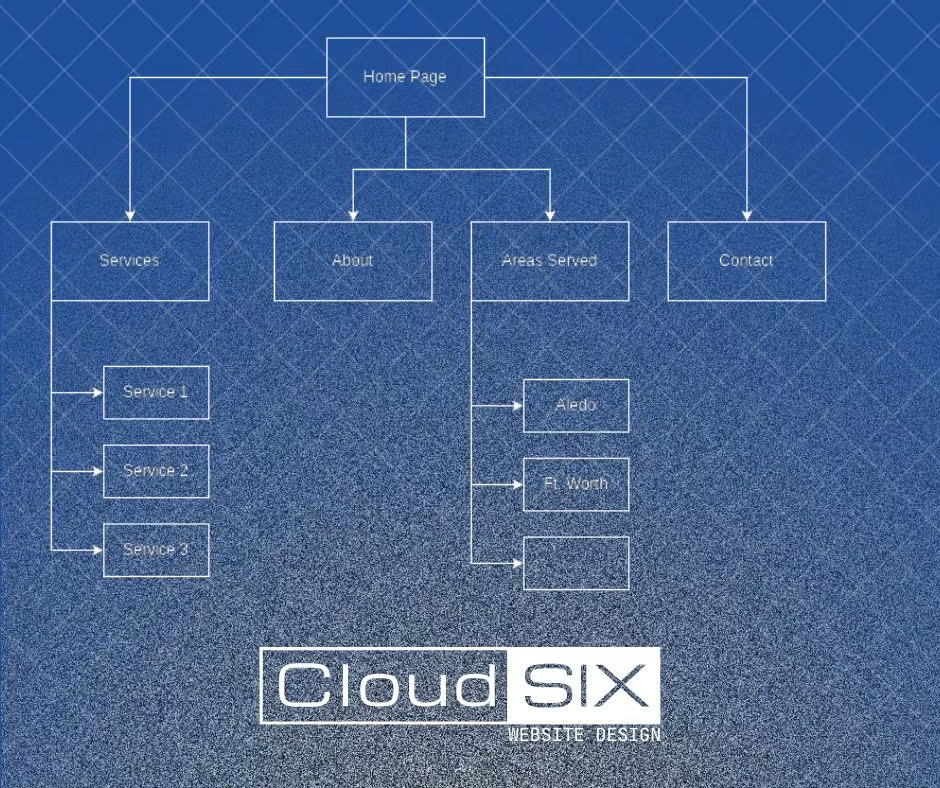
A great website structure allows for future-proof expansion. This means when you decide to launch a new product line or a fresh series of service pages next year, the “slots” are already there. You won’t need to tear down the walls to add a new room.
Logical Growth
By using a scalable silo structure, you can add additional content in the future without confusing search engines or your visitors. This long-term vision ensures that your site stays organized, navigable, and fast, even as your offerings multiply. It’s the difference between a cluttered closet and a perfectly organized library.
Stop Generalizing: The Power of Hyper-Focus
The biggest tragedy in web design is the “Generic Services Page.” It is where interest goes to die. To truly dominate, you need hyper-focused pages that solve one specific, agonizing problem for your customer. Give each offering its own stage. This isn’t just good UX; it’s how you capture the “long-tail” search traffic that your competitors are too lazy to chase.
The “Build a Website Yourself” SEO Checklist
Use this checklist to ensure your DIY project has a solid foundation.
The Blueprint: How to Build Your Legacy
Building a site is an act of creation. Follow these phases to ensure your technical execution matches your creative passion.
- Select a Human-Centric CMS: Choose a platform that empowers you such as WordPress – with thousands of extensible plugins, WordPress is a solid choice.
- Map the Journey: Every page should lead the user towards your ultimate goal – creating a customer.
- Own Your Metadata: Craft titles and descriptions that are clear and compelling – why should they visit your site?
- Embrace the Mobile World: Your site must feel like magic in the palm of a hand. It needs to be fast and easy to navigate – use PageSpeed Insights to test your design.
- Use Internal Links: You need internal links to guide your visitors through your site and tell the story.
- Build External Links: Linking to authority sources in your industry proves you aren’t just guessing—you are building on a foundation of proven expertise.
Your Digital Transformation Starts Now
To build a website yourself is to take full control of your destiny. By marrying the logic of foundational SEO with the emotion of hyper-focused pages and a scalable architecture, you create more than a site—you create a solid foundation for your business.
Don’t just exist online. Command attention. Build the foundation today, and watch your business offerings reach the people who need them most. If you want a professional team to handle the heavy lifting while you focus on your business, contact Cloud Six today for a structural audit.